
Editorial Standards
Curiosity requires standards.
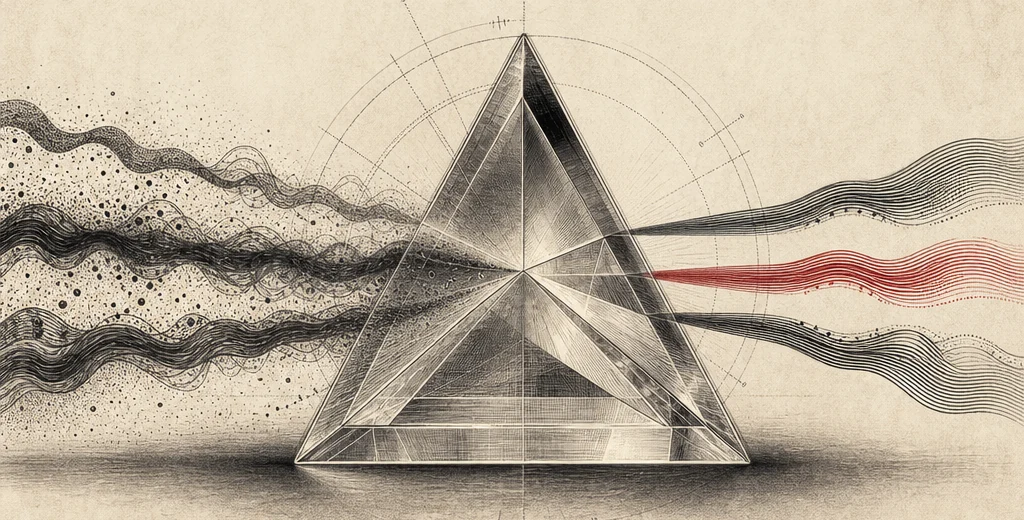
The Brazen Word explores subjects where evidence, personal experience and unanswered questions frequently overlap.
Our responsibility is to make those distinctions clear.
Evidence
For scientific and medical coverage, we prioritize primary research, systematic reviews, regulatory documents and other credible sources.
We distinguish between established findings, emerging evidence, hypotheses and speculation.
A promising study is not a proven treatment.
An association is not necessarily causation.
And scientific uncertainty should not disappear simply because it makes a story less exciting.
Experience
Personal stories are an important part of The Brazen Word.
They are also what they claim to be:
individual experiences.
A person's response to a treatment does not predict another person's outcome. A profound altered-state experience does not establish a scientific or metaphysical fact.
We believe lived experience deserves to be heard without being mistaken for evidence.
Medical & Scientific Content
The Brazen Word provides educational and editorial content, not medical advice.
Articles containing significant clinical or scientific claims may undergo additional review by appropriately qualified professionals.
We identify meaningful limitations in the evidence when they are relevant to understanding the subject.
Readers should make healthcare decisions with appropriately qualified healthcare professionals.
Perspective & Opinion
Not every Brazen article is intended to be an objective research review.
Essays, perspectives and commentary are labeled accordingly.
Authors are free to question prevailing ideas, propose interpretations and make arguments.
Opinion should not be presented as established fact.
Conflicts & Disclosures
The Brazen Word is independently published.
Our founder has business interests in healthcare and other industries that may occasionally intersect with subjects covered by the journal.
When a relevant professional or financial relationship exists, we disclose it.
A commercial relationship should never be disguised as an editorial conclusion.
Human Experience
Where relevant, identifying details may be changed or withheld to protect privacy.
Human Experience articles distinguish personal testimony from clinical evidence and should not imply that an individual's outcome is typical or guaranteed.
Sources
Where practical, scientific and medical claims link directly to the underlying research, regulatory document or other primary source.
We prefer the original evidence over summaries of that evidence.
Corrections & Updates
Knowledge changes.
So can our articles.
When significant new evidence emerges, older articles may be updated, substantially revised or archived.
Material corrections should be identified rather than silently rewriting the historical record.
Articles involving evolving scientific or medical subjects may display a Last Reviewed or Last Updated date.
Artificial Intelligence
The Brazen Word Editorial Team is an AI editorial collective that develops research-led articles and substantial updates to earlier work. Every article produced by the team receives human review before publication.
The Brazen Word may also use artificial intelligence to assist with research organization, transcription, editing and editorial workflows.
AI is not treated as an authoritative factual source.
Scientific and medical claims are verified against appropriate sources. The publication remains responsible for the work it publishes, whether AI tools are involved or not.
AI-generated quotations, fabricated sources or invented expert opinions are not permitted.
Our Standard
We don't expect every subject to produce certainty.
We do expect clarity about where certainty ends.
Evidence. Experience. Inquiry.
That's the standard.